Little
Cridders II
The story continues. Six small heroes survived the dew line — now they have to survive what comes after, on the other side of the trees, in a world built of glass and noise.

Cast, outline, and a feature in eighteen sequences. Click any to expand. (Film 2 framework — content coming soon.)
TBD — the six returning (or new) heroes carrying the story of Film 2. Write in the cast cards below as the script firms up.
TBD — one or two lines of character bio. Why they are on this journey, what they fear, what they want.
TBD — new humans, returning Cridders, fresh hybrids, and the antagonists driving Film 2.
A condensed scene-by-scene of the full feature, mapped to the 18-sequence spine. Each entry is one beat — they expand into roughly one screenplay page. Fill in as the story locks.
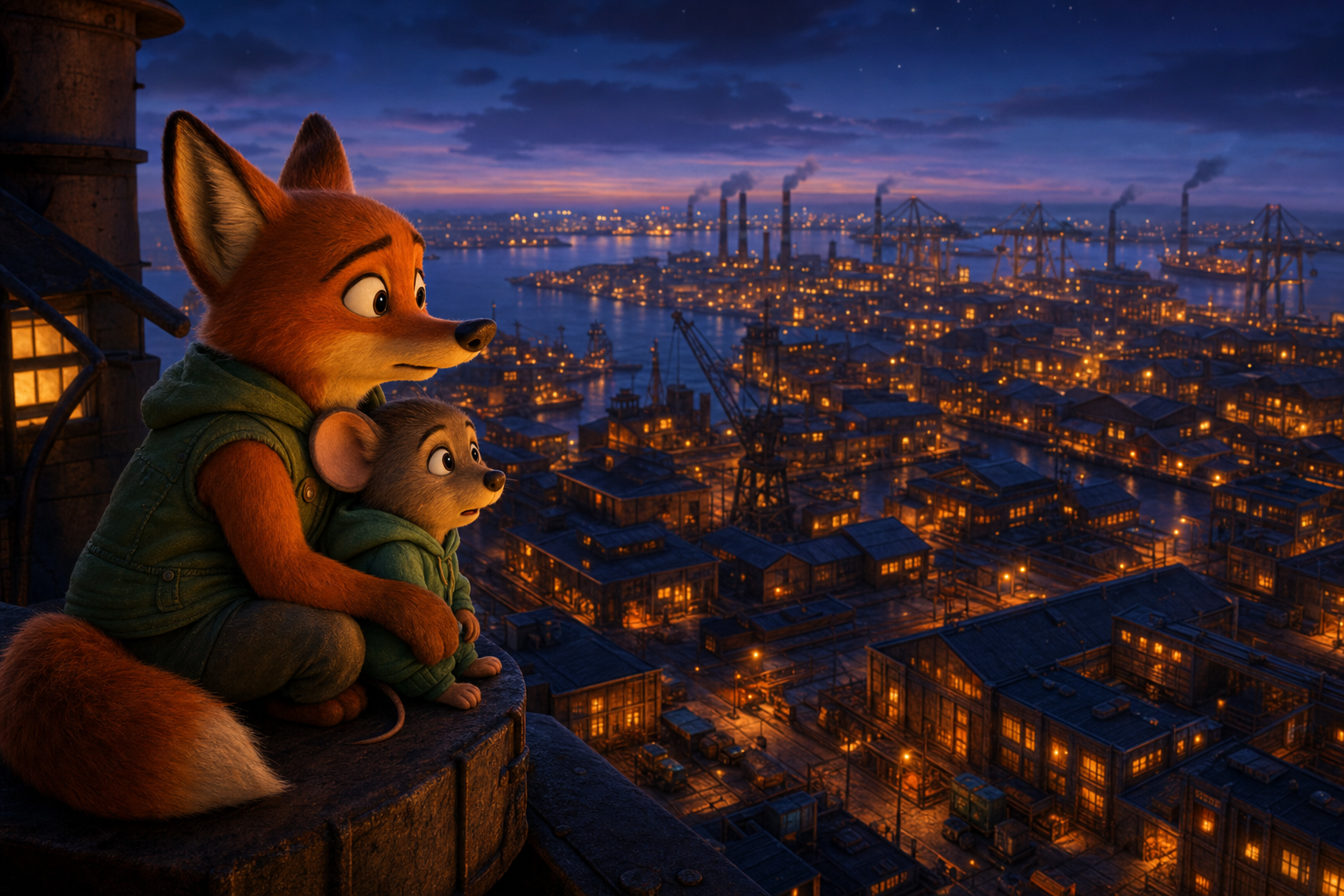
A held breath, in three layers. We open inside a Cridderville hollow on the New York forest edge, lift away over a city glowing cold with smokestacks and drone-yards, then keep rising — until the curve of the earth shows us this isn’t one war, it’s many. A dozen distant cities glow with the same industrial light. A dozen tiny forest pockets glow back. The film begins on a planet that has not decided yet which side of itself is going to win.
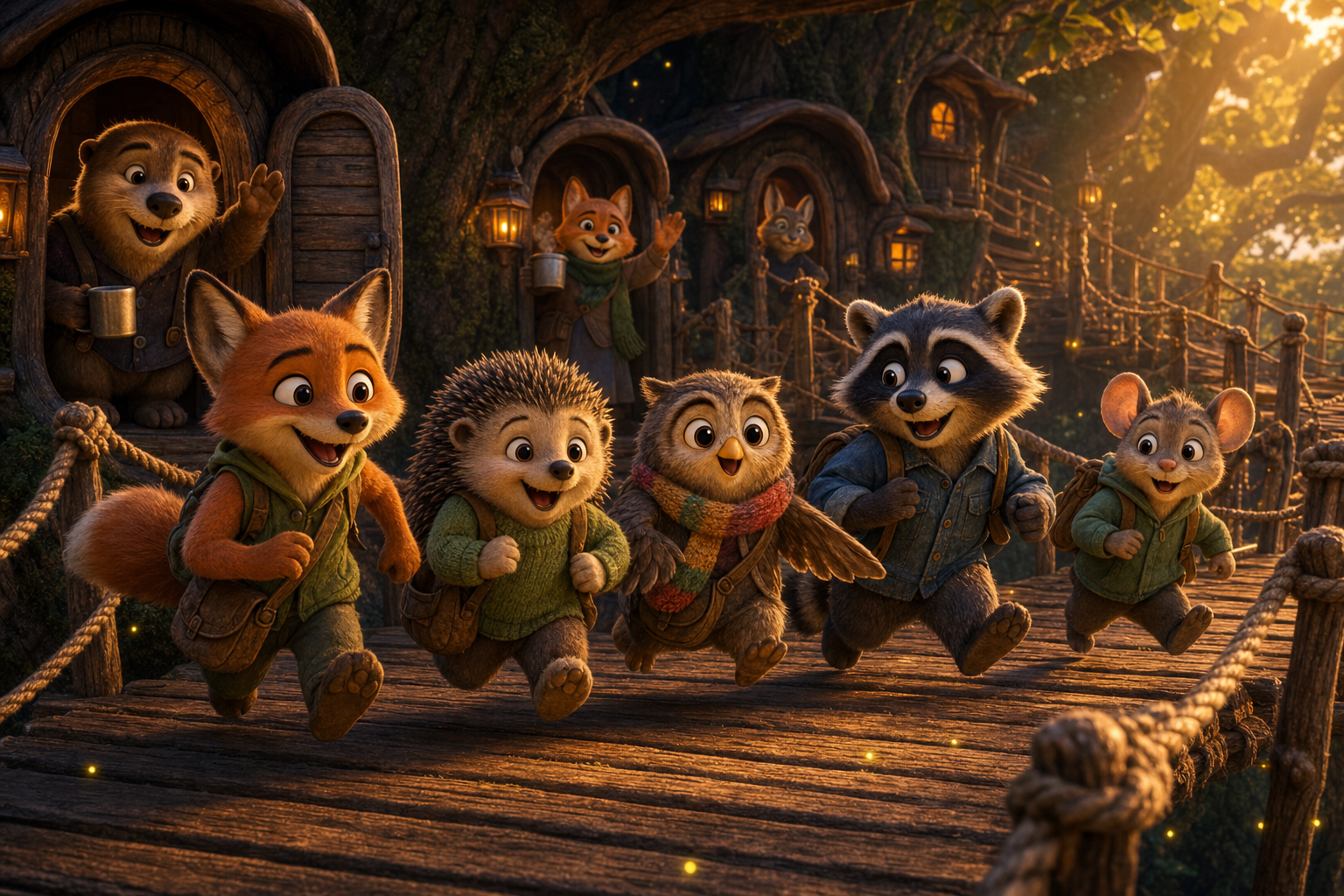
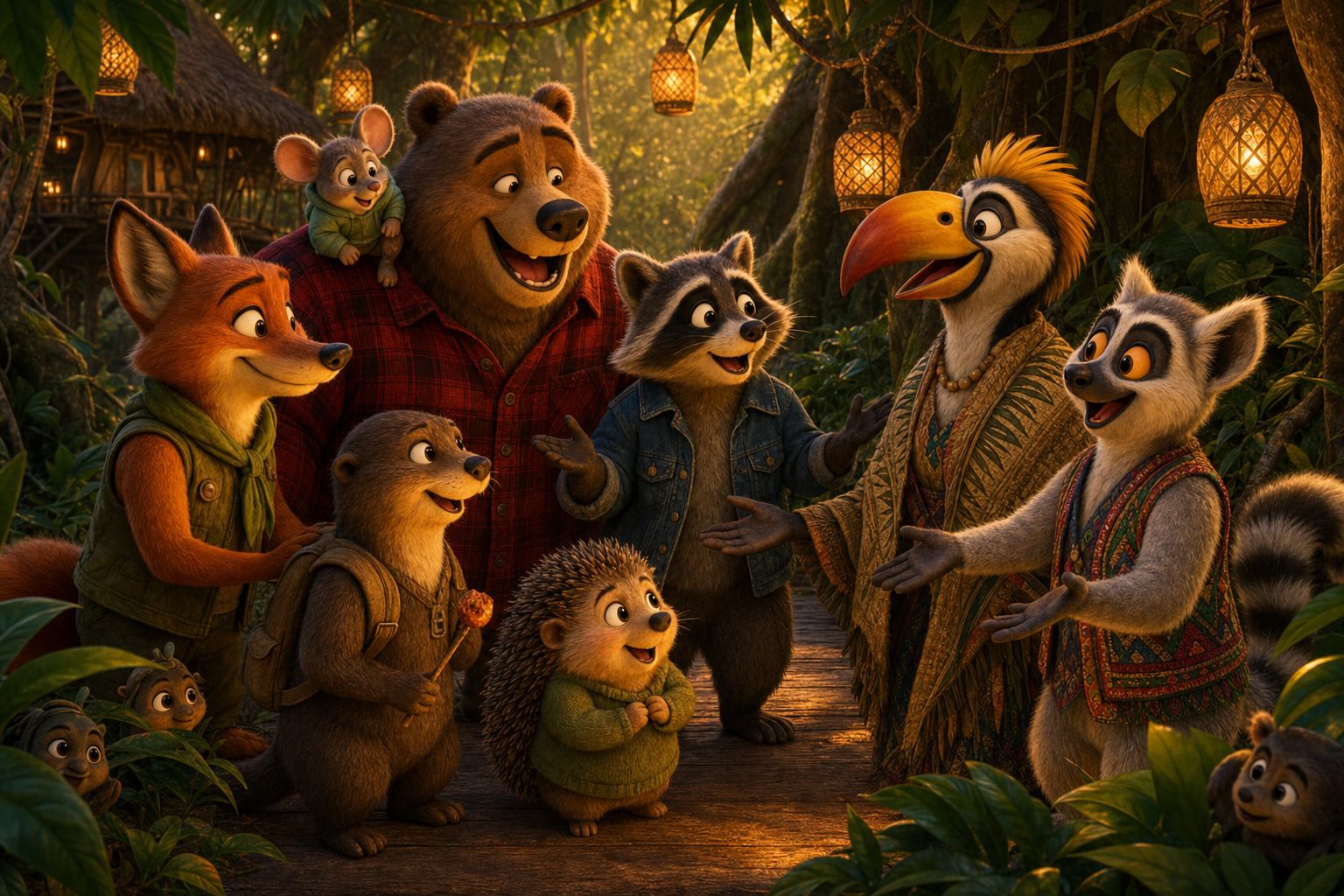
Dawn over the Great Oak again. New bridges, new rope-lifts, criddlets running to school. The aftermath of Film 1 has settled into something that almost feels like peace. Almost.
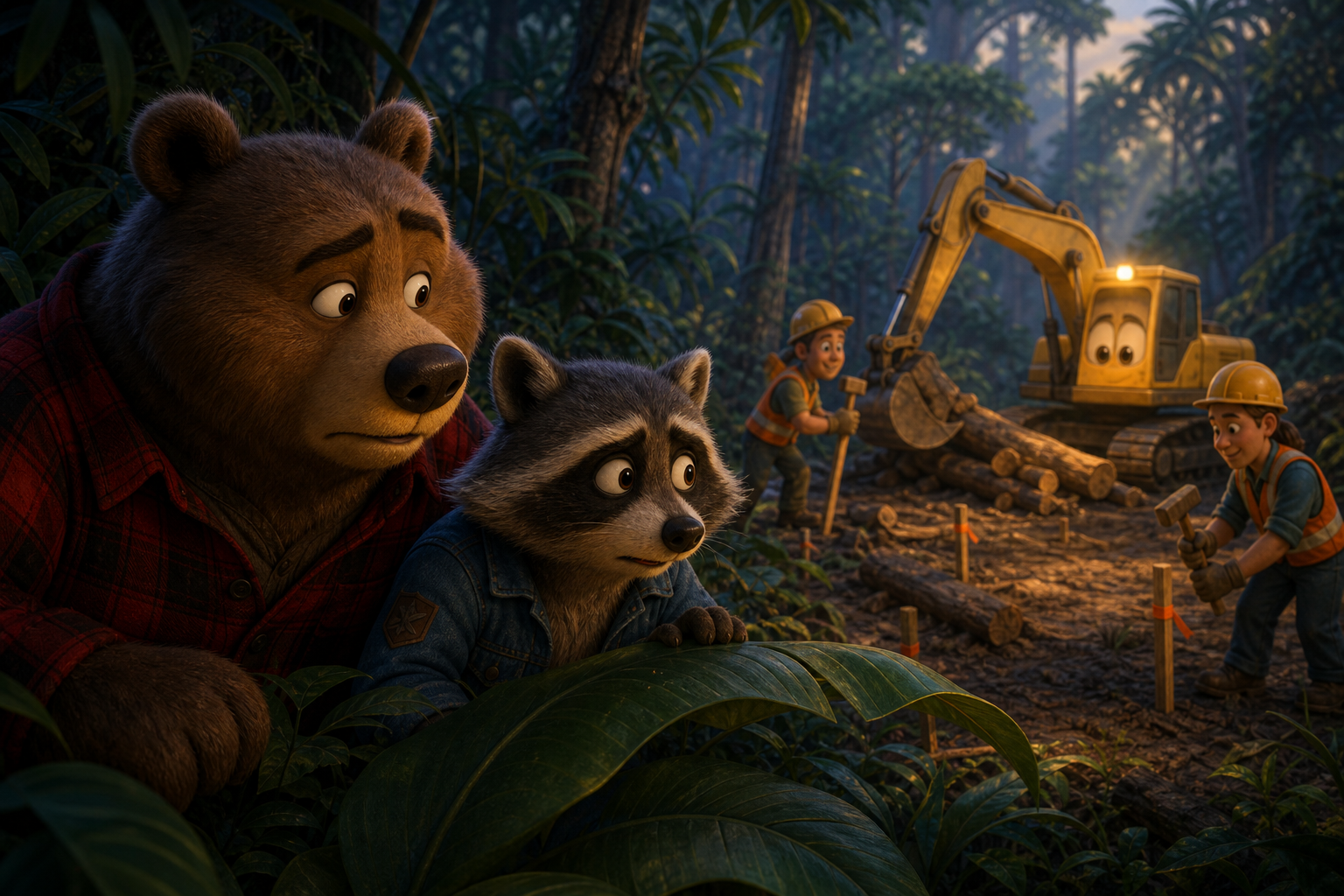
A low rumble walks the dewline. Survey-stakes are back. A drone shadow at the canopy. The heroes find a fresh scar at the forest’s edge that wasn’t there yesterday. The fear is not theirs — but they can feel the humans bringing it.
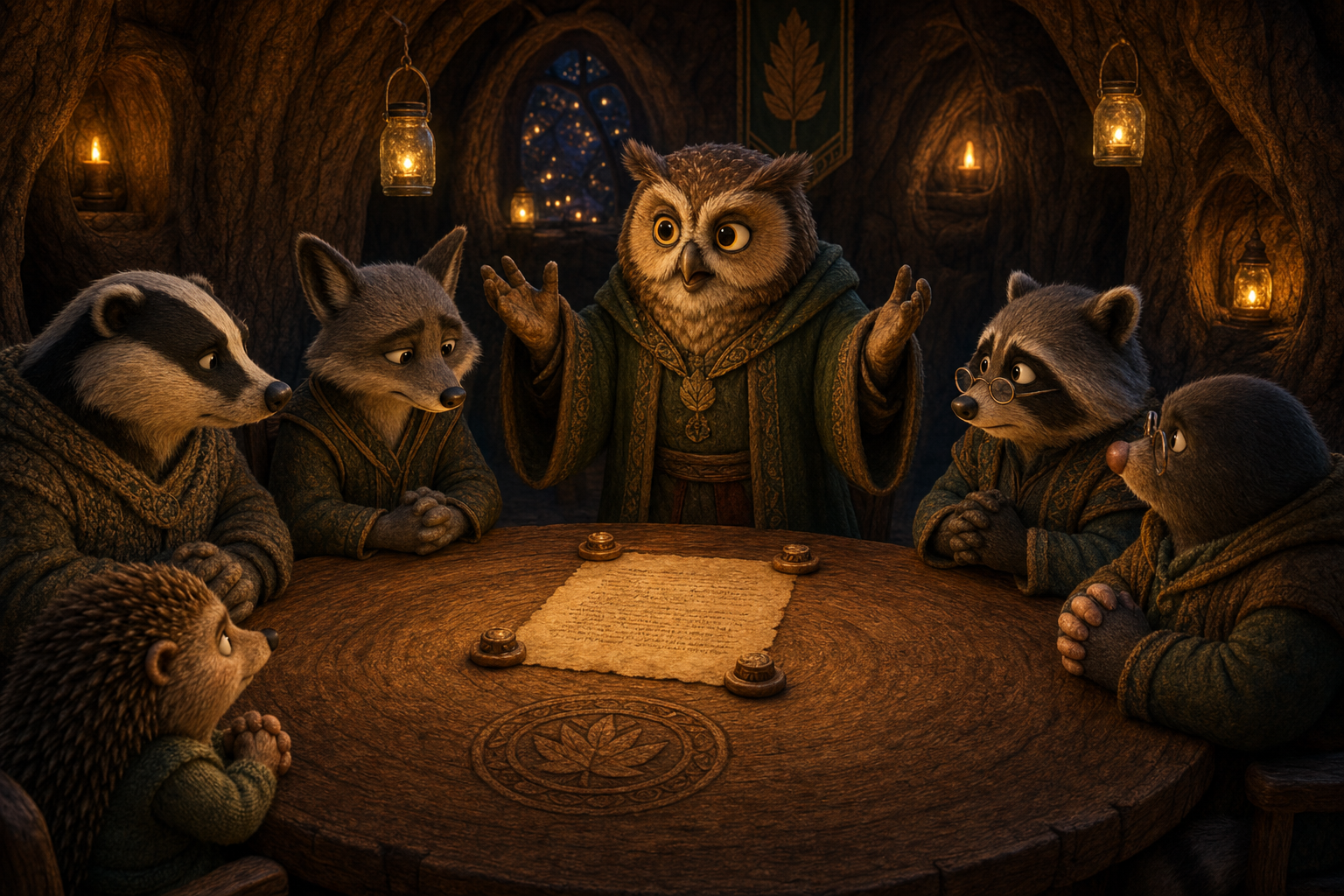
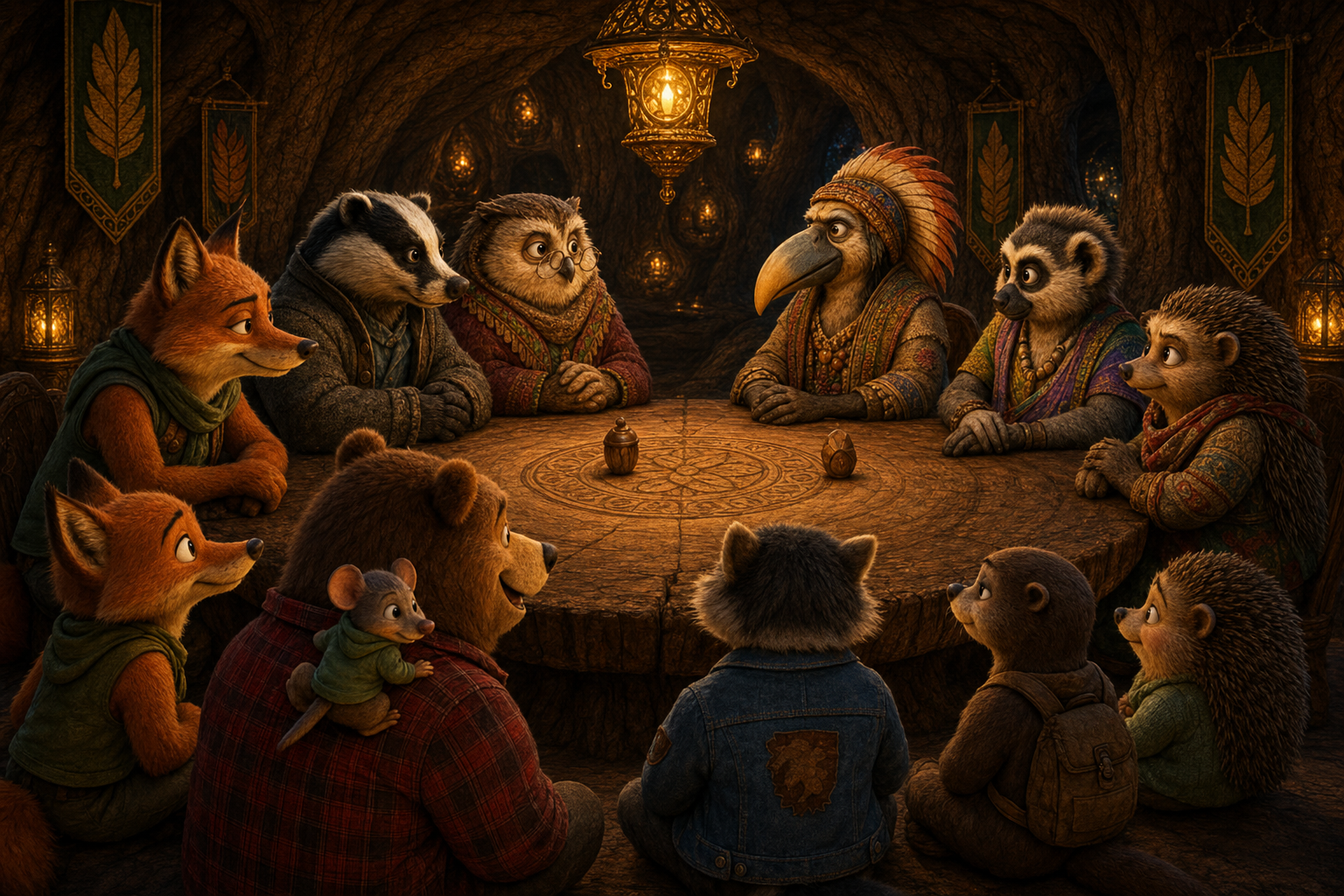
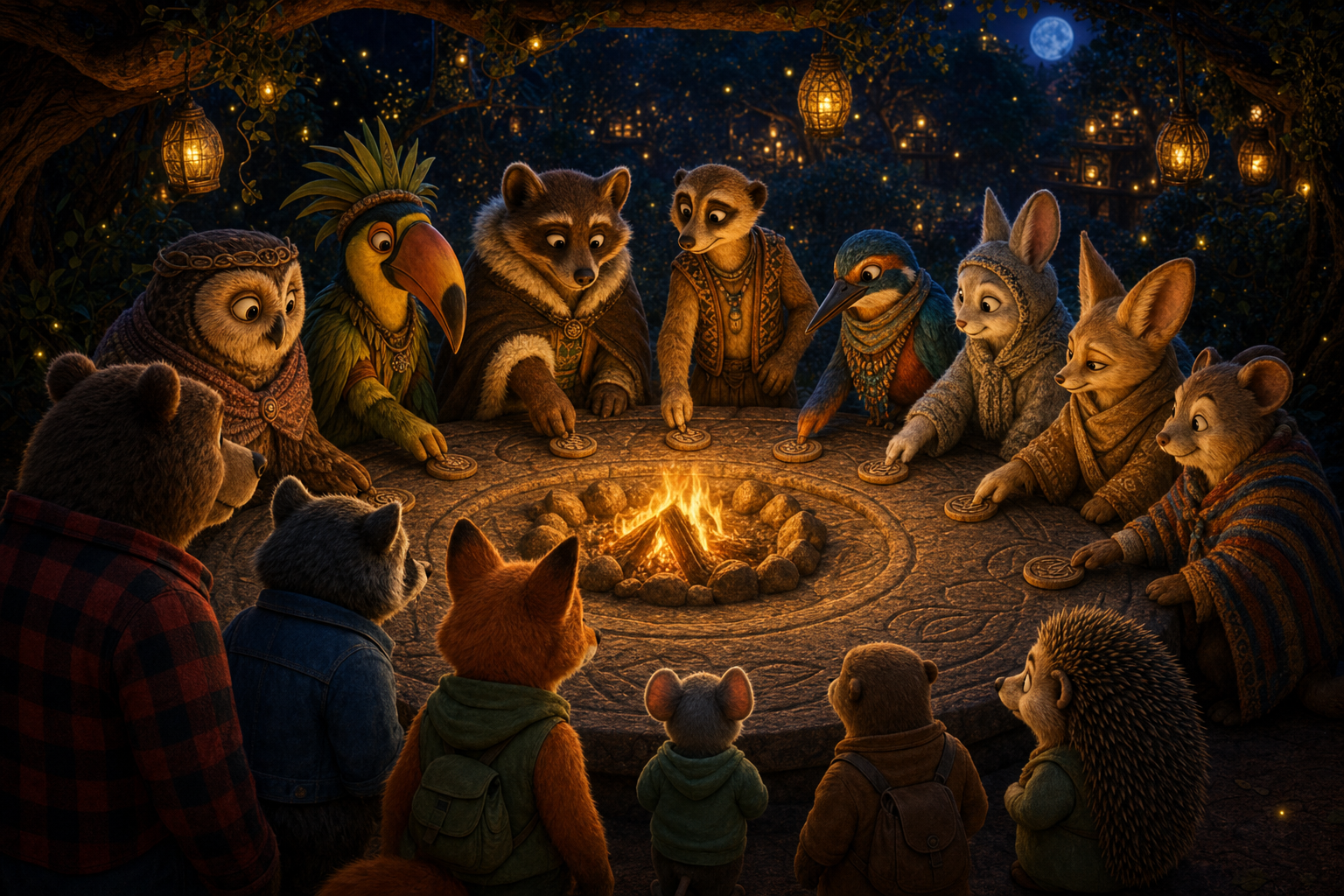
The elders reconvene around the slab. Oil lamps, firefly lanterns, the pact-tokens of every village line laid out in a ring. The owl chief speaks the line that frames the film: “This is not the small fear. This is the big one.”
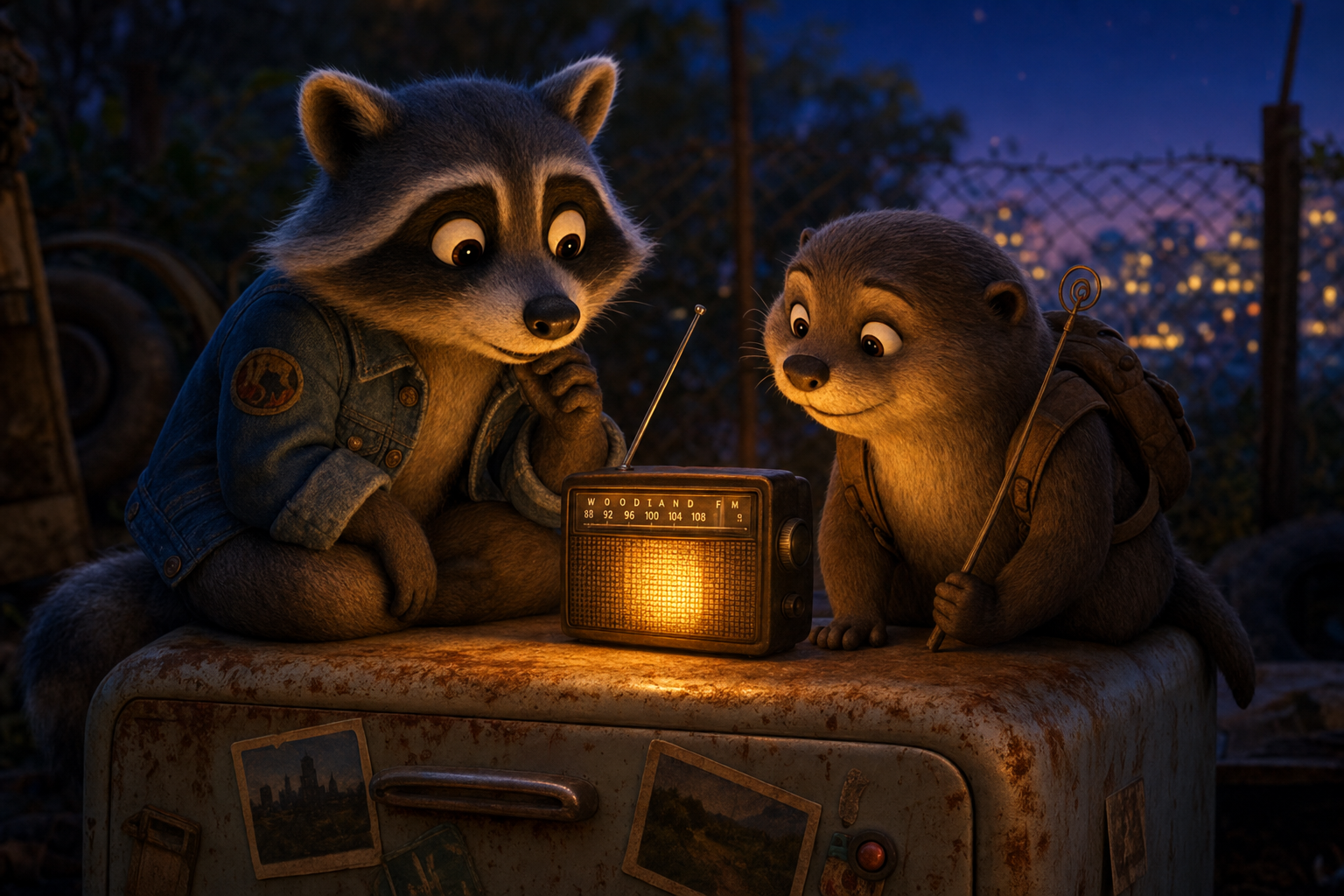
Heroes intercept a human broadcast at the edge of a junkyard antenna. News montage cuts in: Tokyo, Berlin, Cairo, Mumbai, São Paulo — every major human city is building the same robotic armies, the same superweapons, the same fear, at industrial scale. The film opens up.
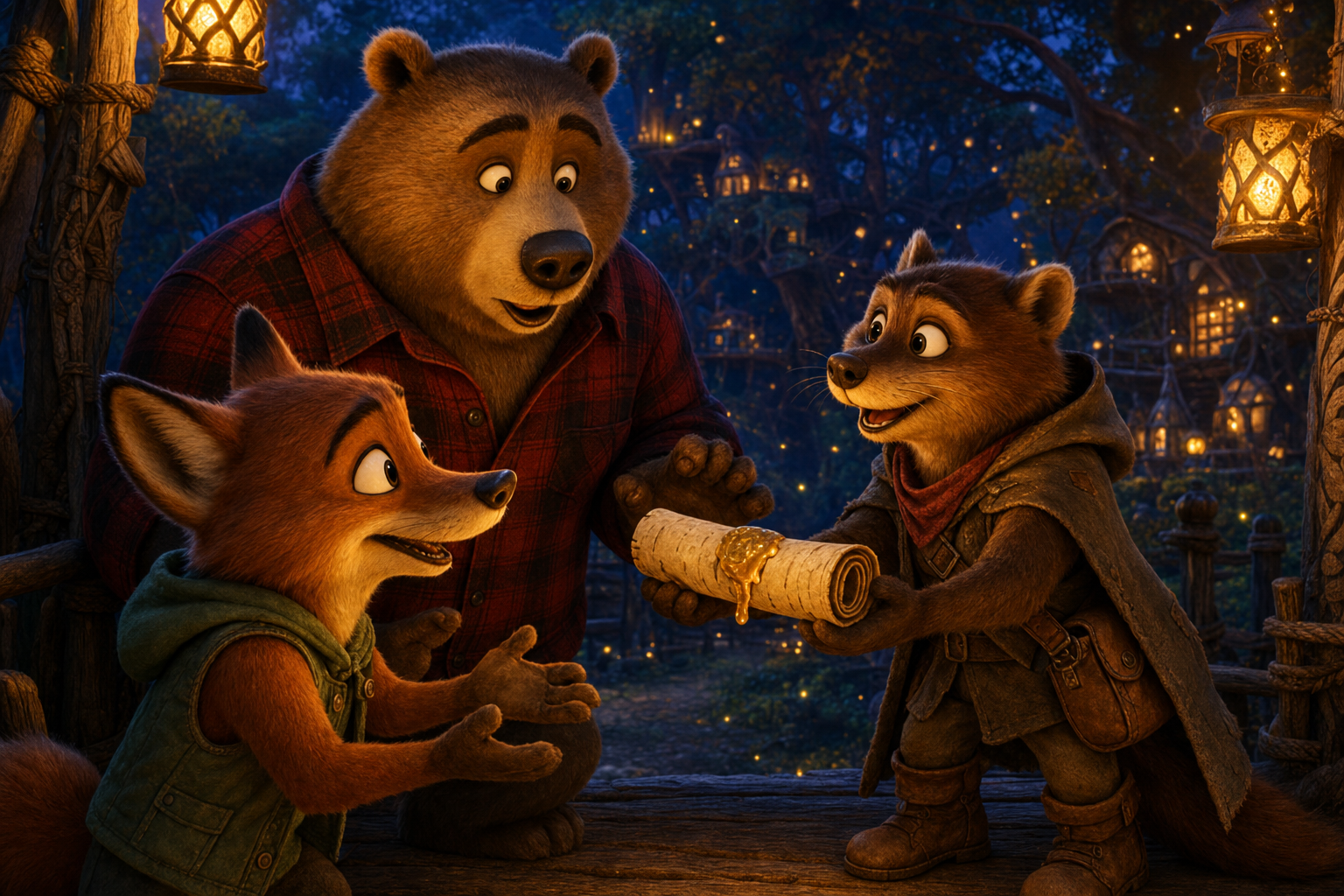
A travel-worn Cridder messenger arrives at the dewline at dusk, carrying a leaf-pact scroll sealed with sap-wax from a village none of the heroes have ever heard of. There are other villages. They are calling.
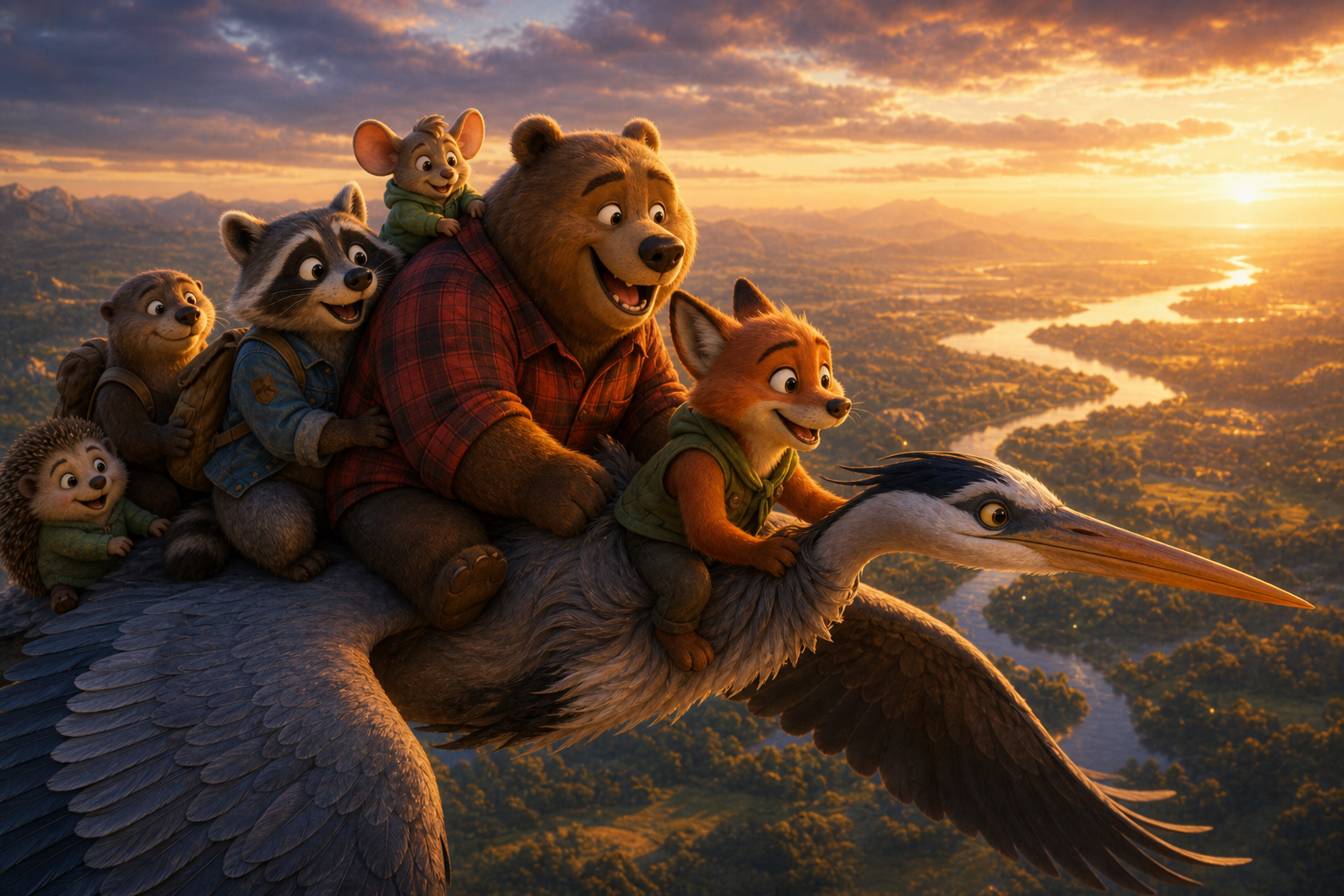
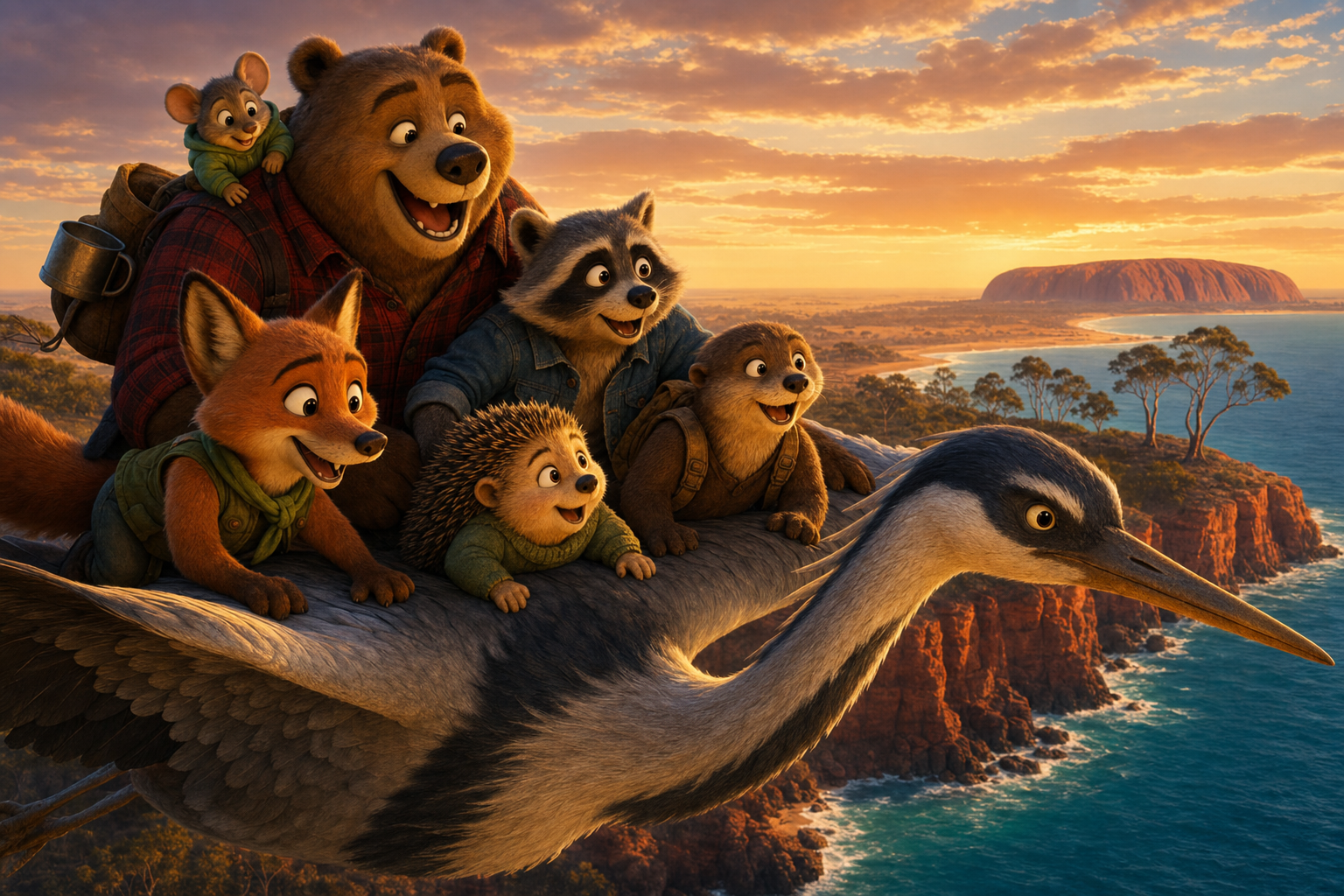
The heroes leave Cridderville again — this time across true distance. Migratory bird-back, river-raft, freight-train shadows, days melting into nights. The forest they came from gets smaller behind them, and then disappears.
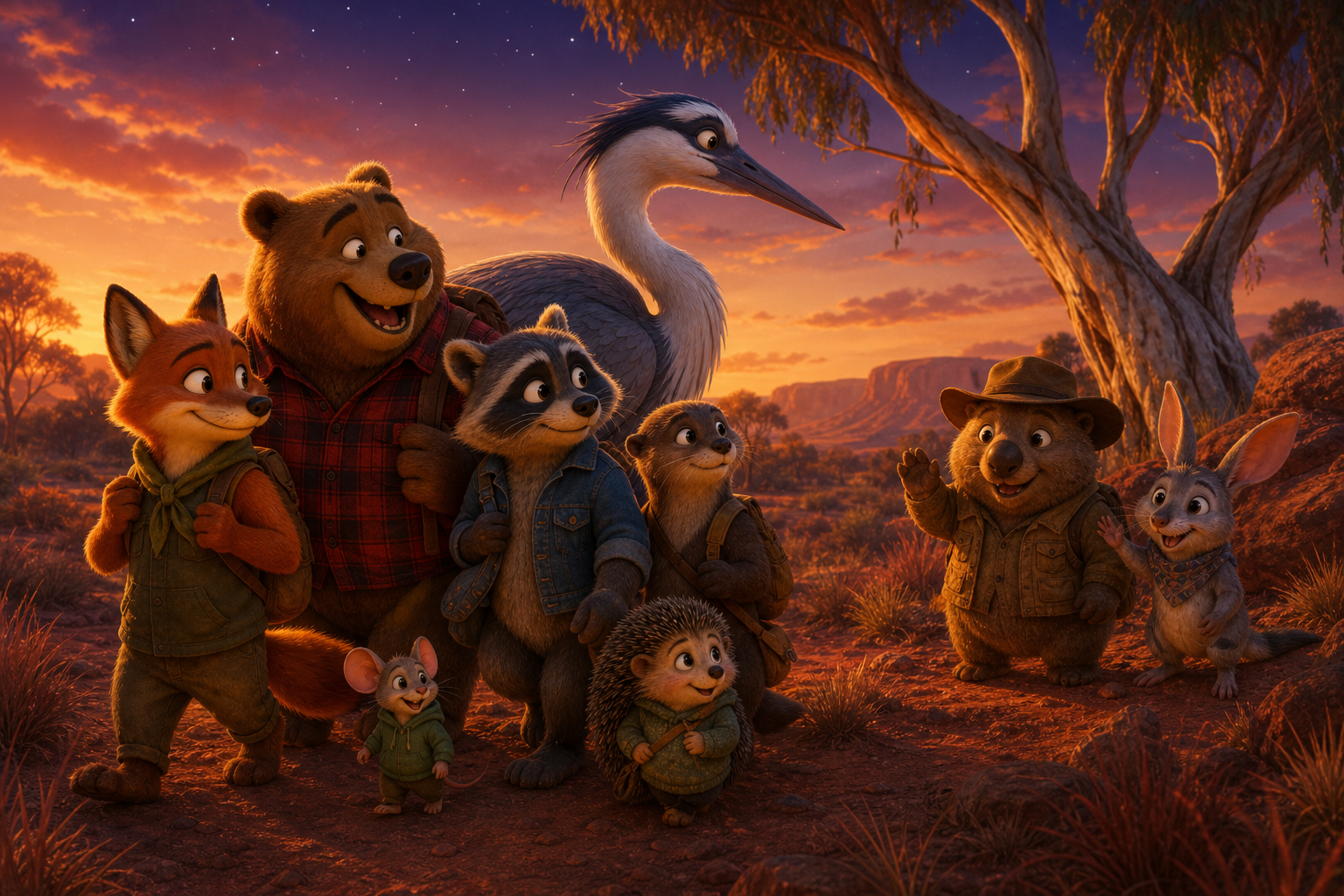
First contact with a foreign Cridder village — different climate, different costume, different songs — in another biome entirely (rainforest canopy, boreal pine, savannah baobab). The heroes realise, for the first time, that “Cridder” is bigger than their oak.
The first inter-village diplomatic council in living memory. Ceremonial gifts. Shared lantern fire. Two species of hedgehogs negotiating whose pact-token sits where on the slab. Cridder diplomacy is not a procedure — it’s a ritual. It is also, the film argues, a kind of love.
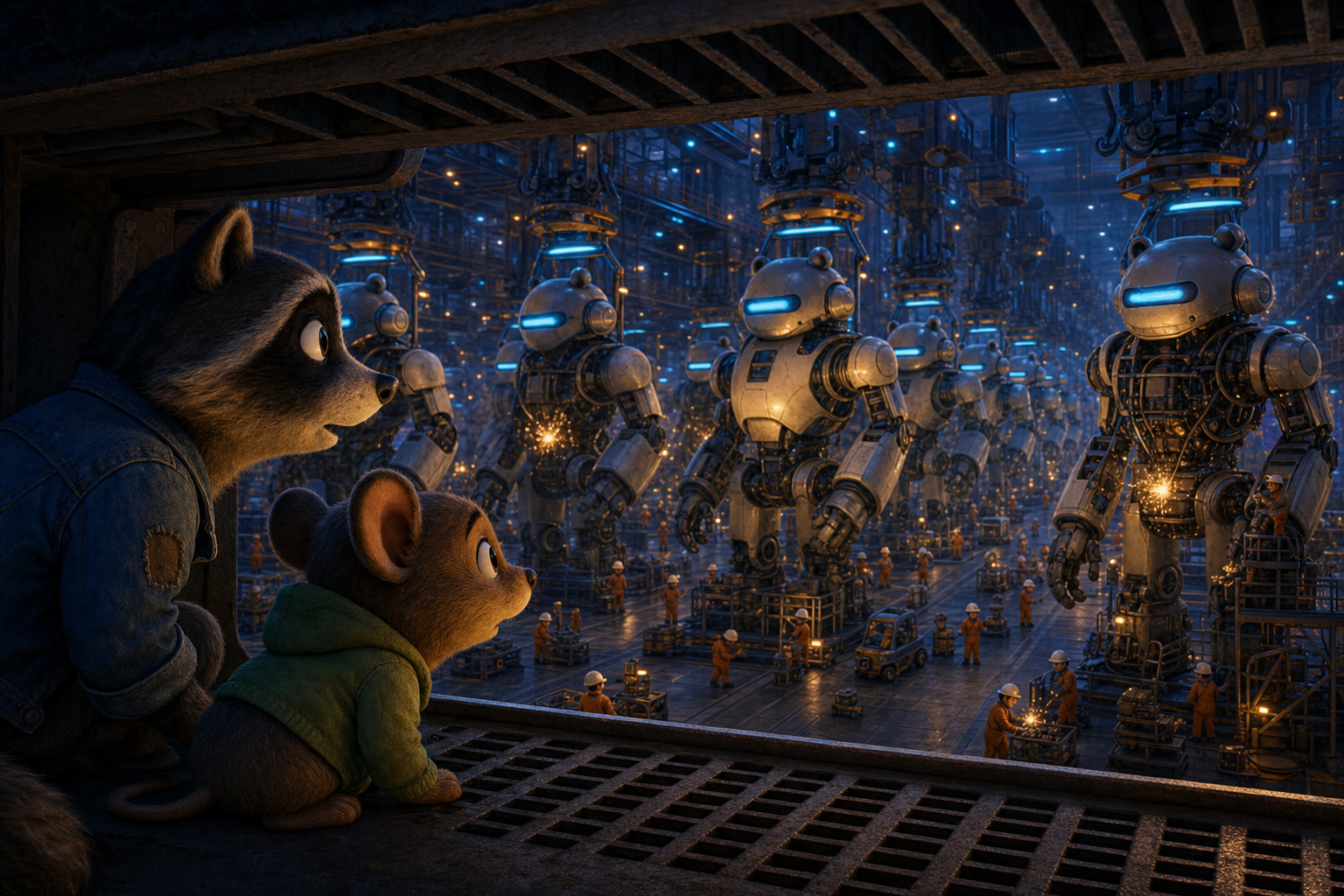
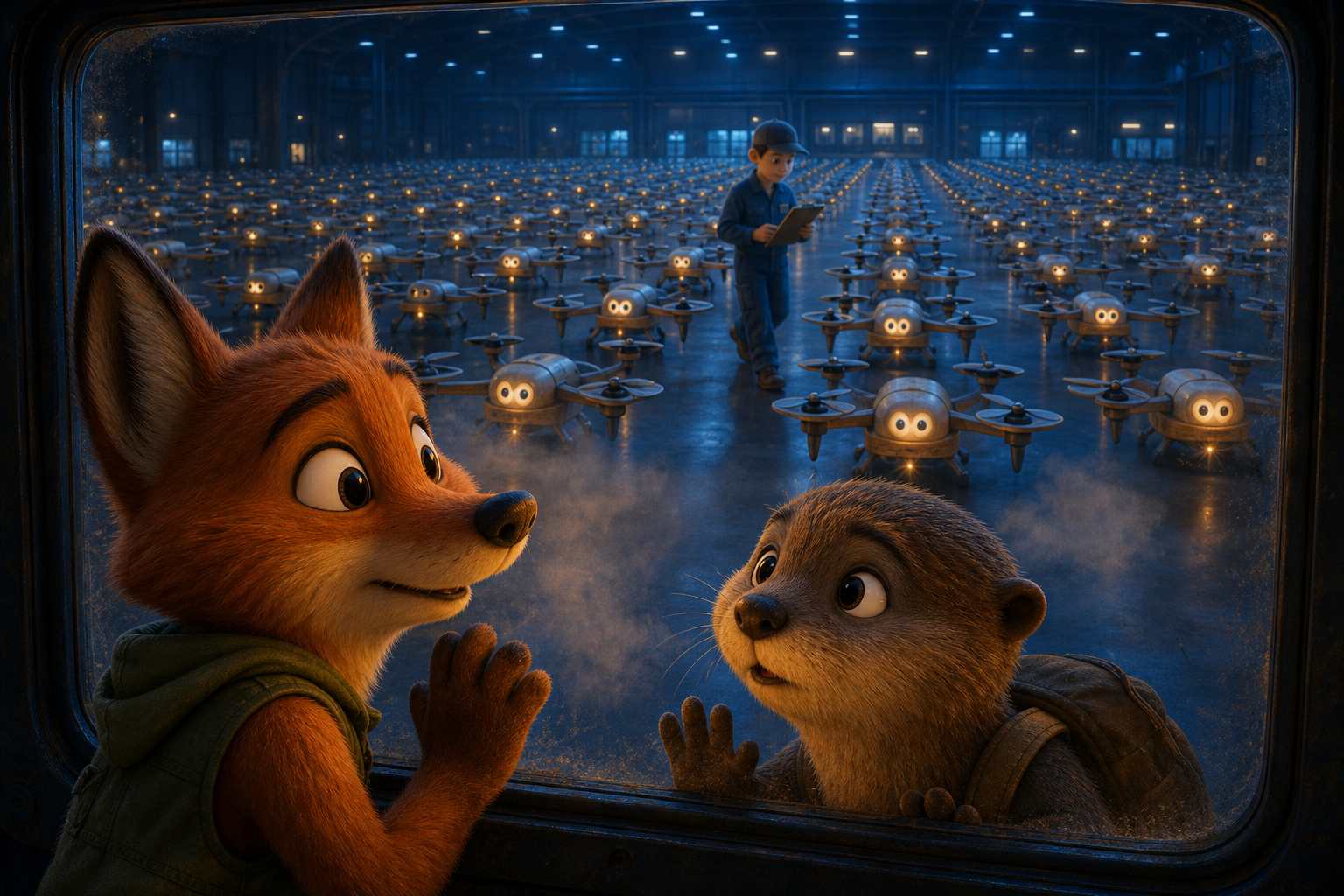
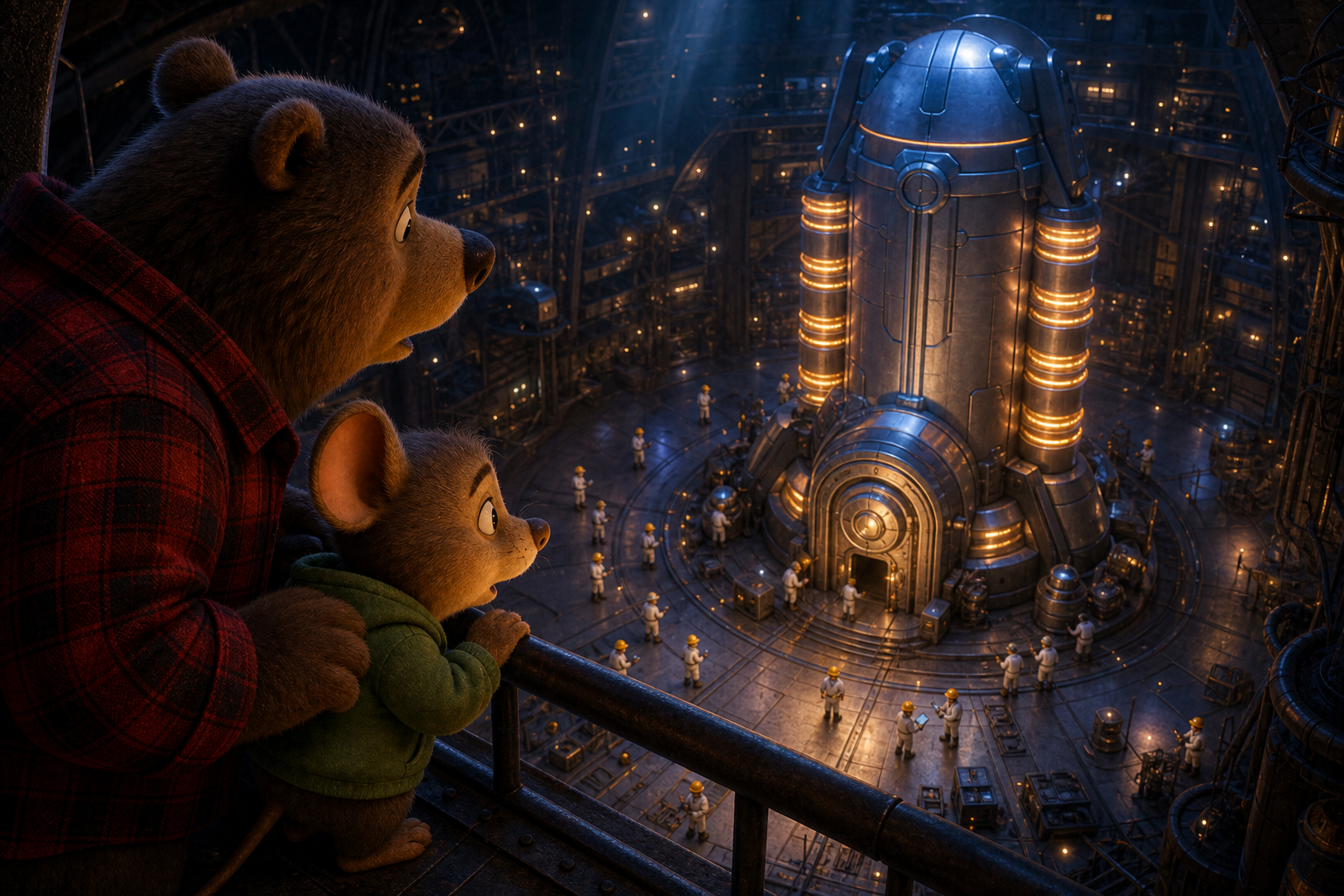
Wide montage of human industrial centers across the planet. Mech bays in Detroit. Drone fleets in Shenzhen. Robotic legions in Berlin. Superweapon hangars under the Negev. Every city building the same machine. None of them admitting why.
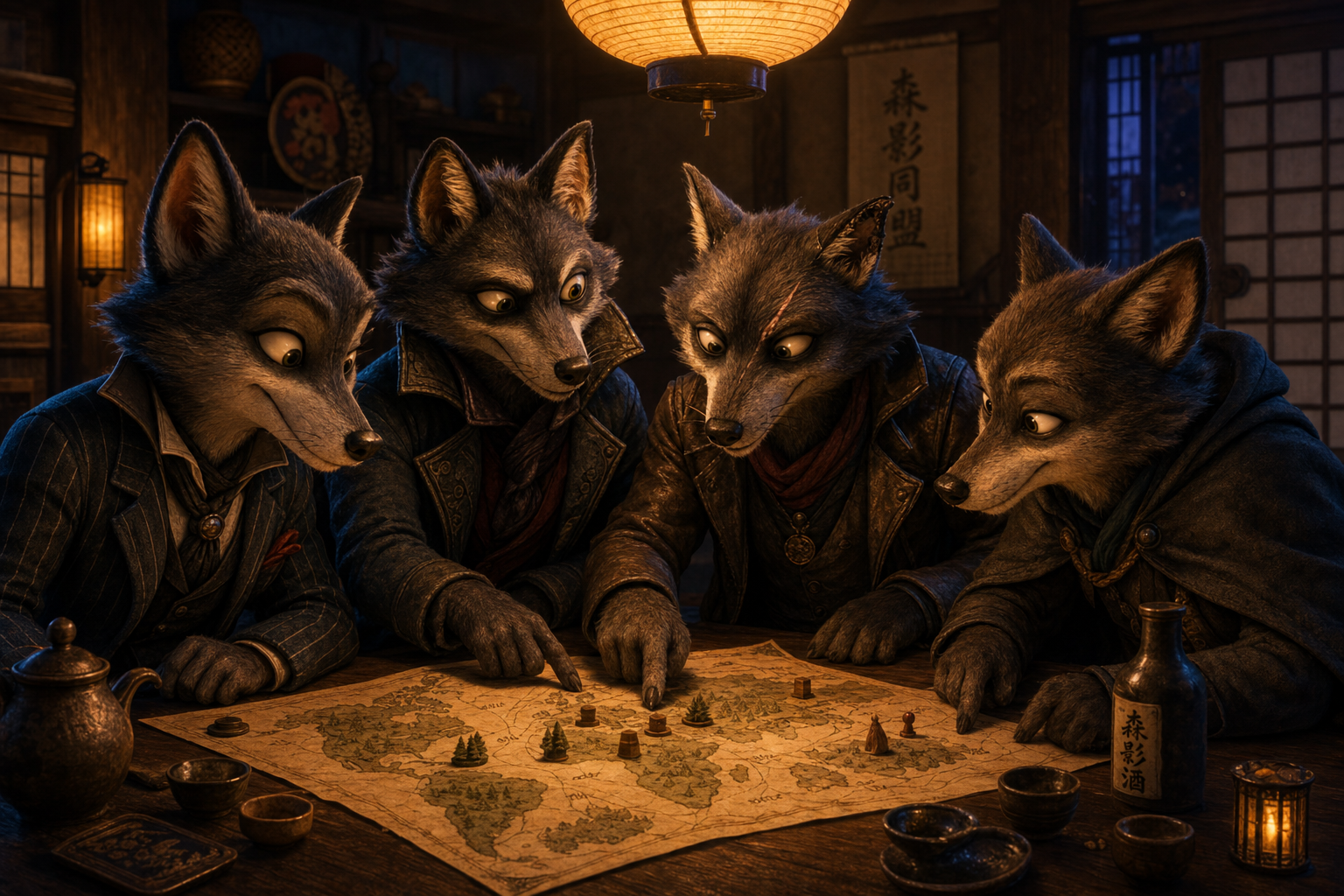
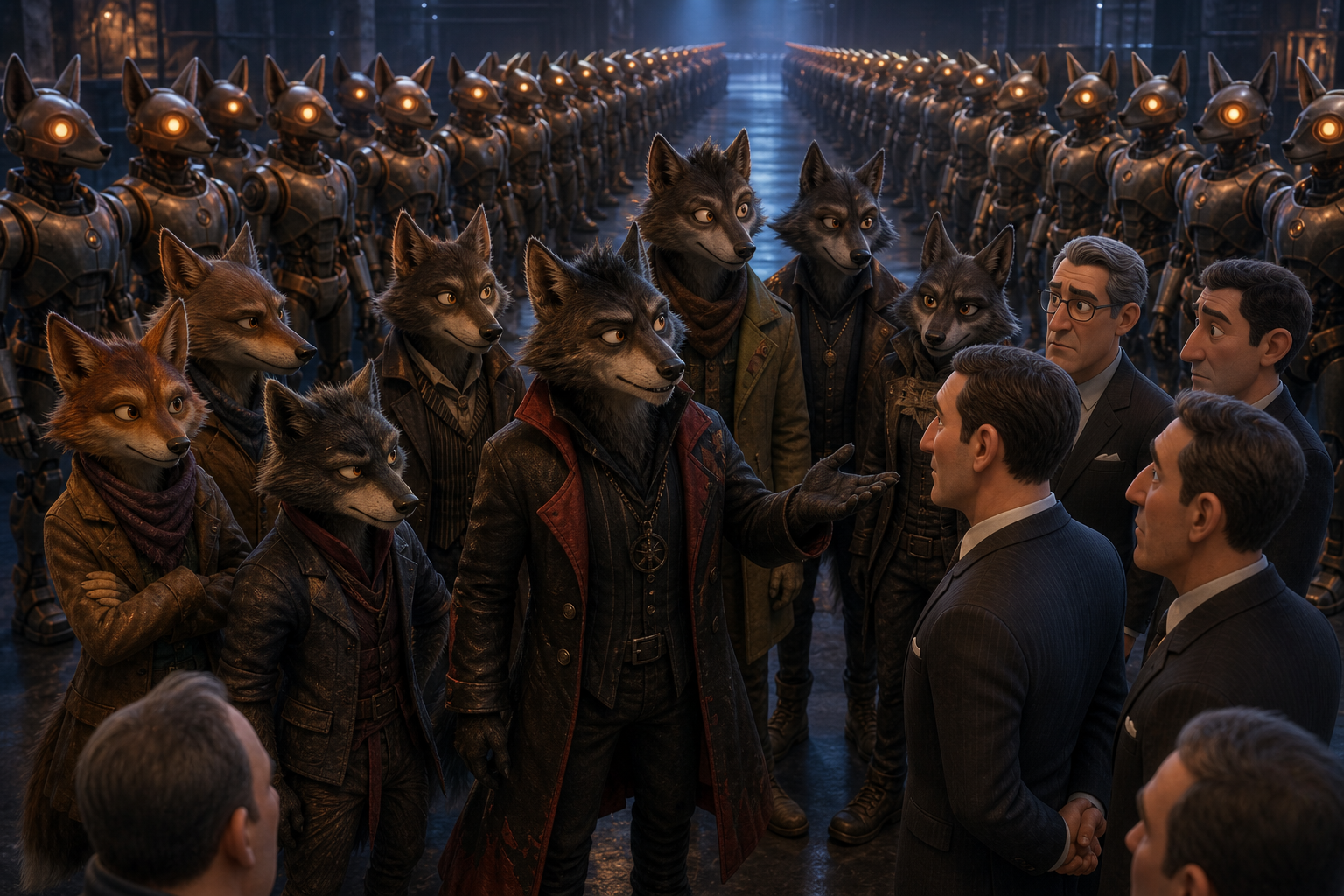
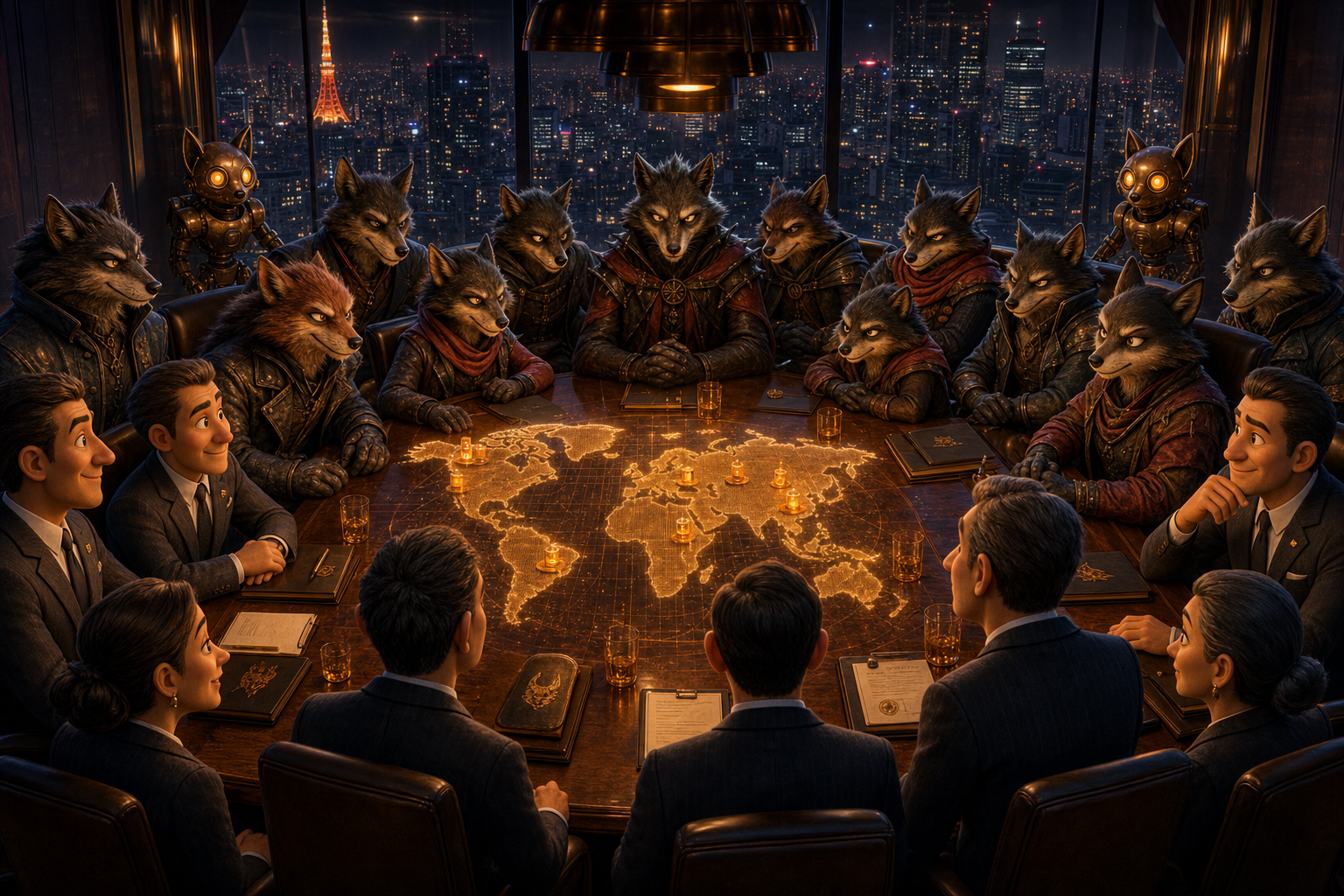
Vaspar’s exile-faction has counterparts. Cut between Creptor delegates inside human boardrooms in Tokyo, London, Mumbai, São Paulo — passing pact-tokens, marking maps, naming the next forest to fall. The antagonist is no longer one fox in one alley. It’s a network.
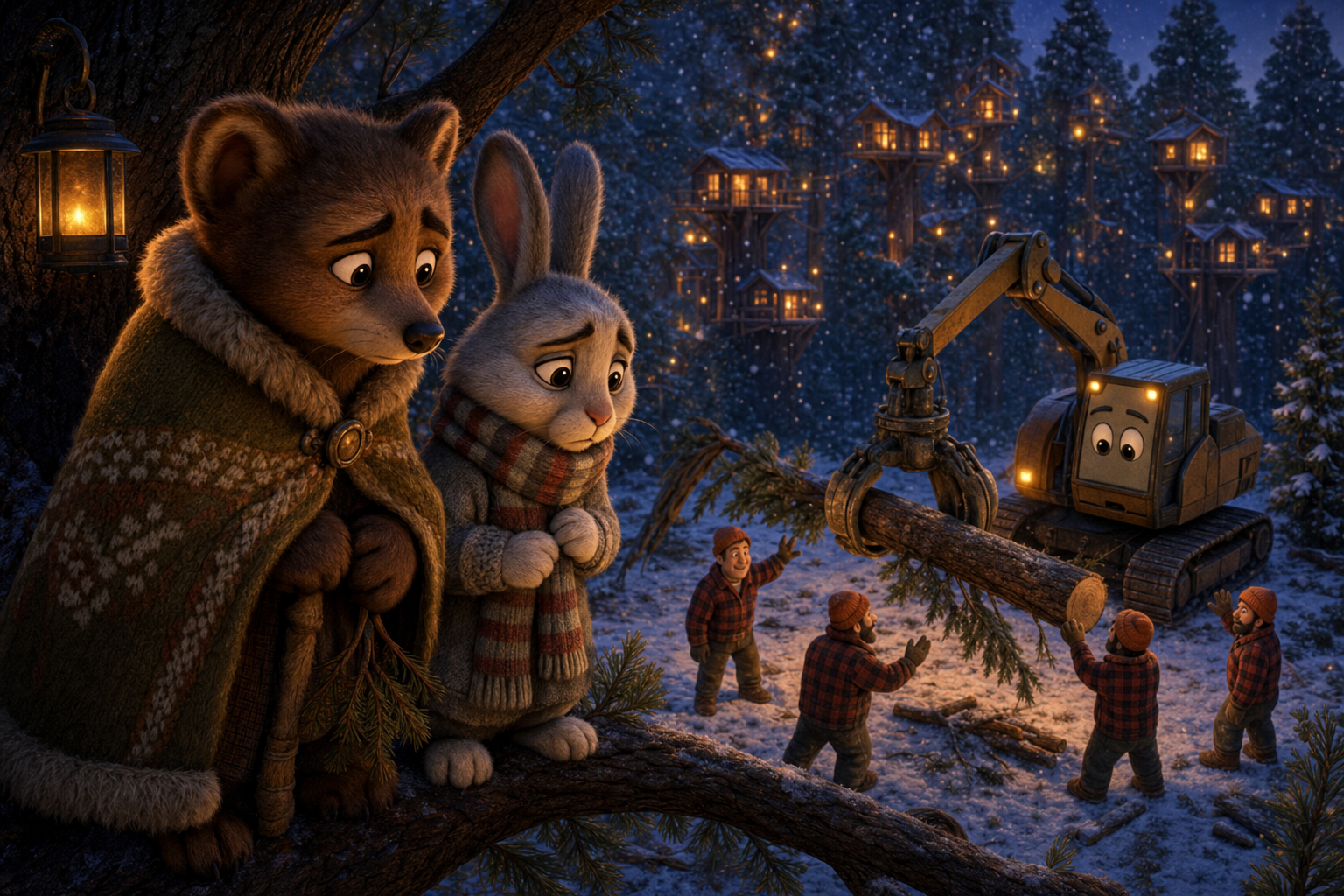
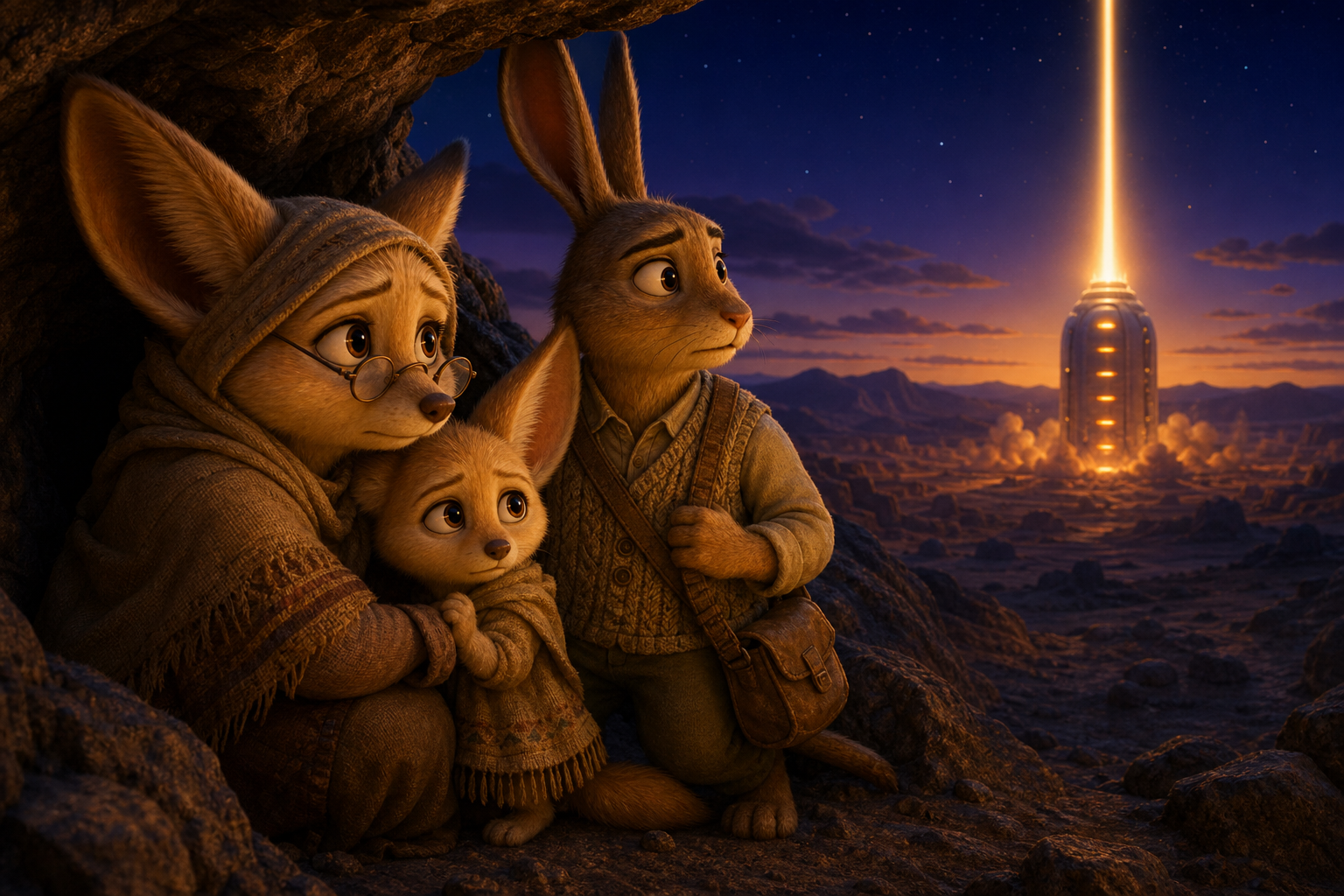
Forests on three continents are being cut for the same minerals and the same oil. Survey stakes in the Amazon. Derricks in the boreal. Drilling in the savannah. Tiny Cridder villages in real-time emergency on three different night shifts.
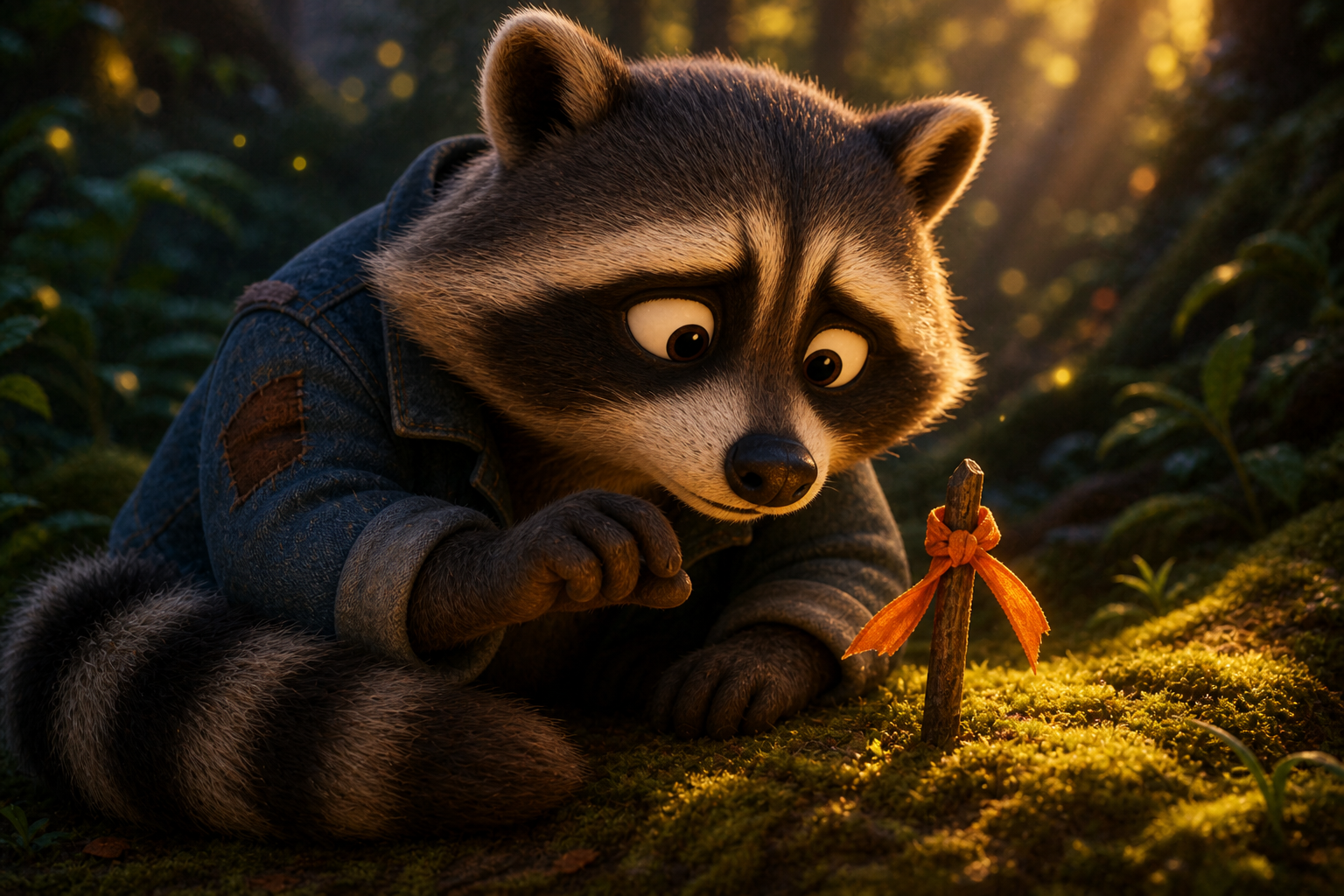
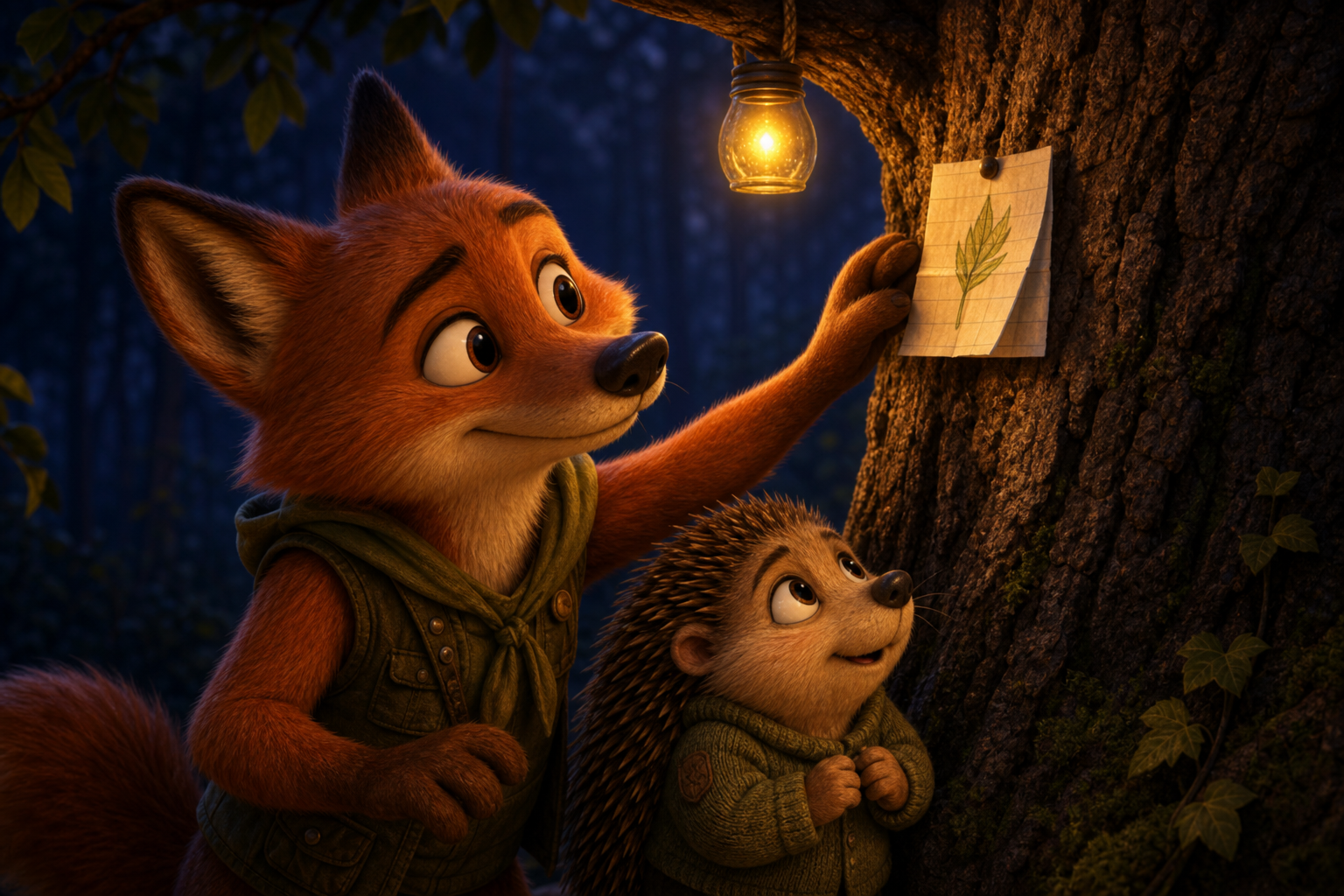
A young defector inside one of the NY weapons labs — a junior biologist, maybe a journalist’s kid — leaves a hesitant note on a tree at the dewline. Not signed. Not sure. But left. The first human, in this film, who is not afraid.
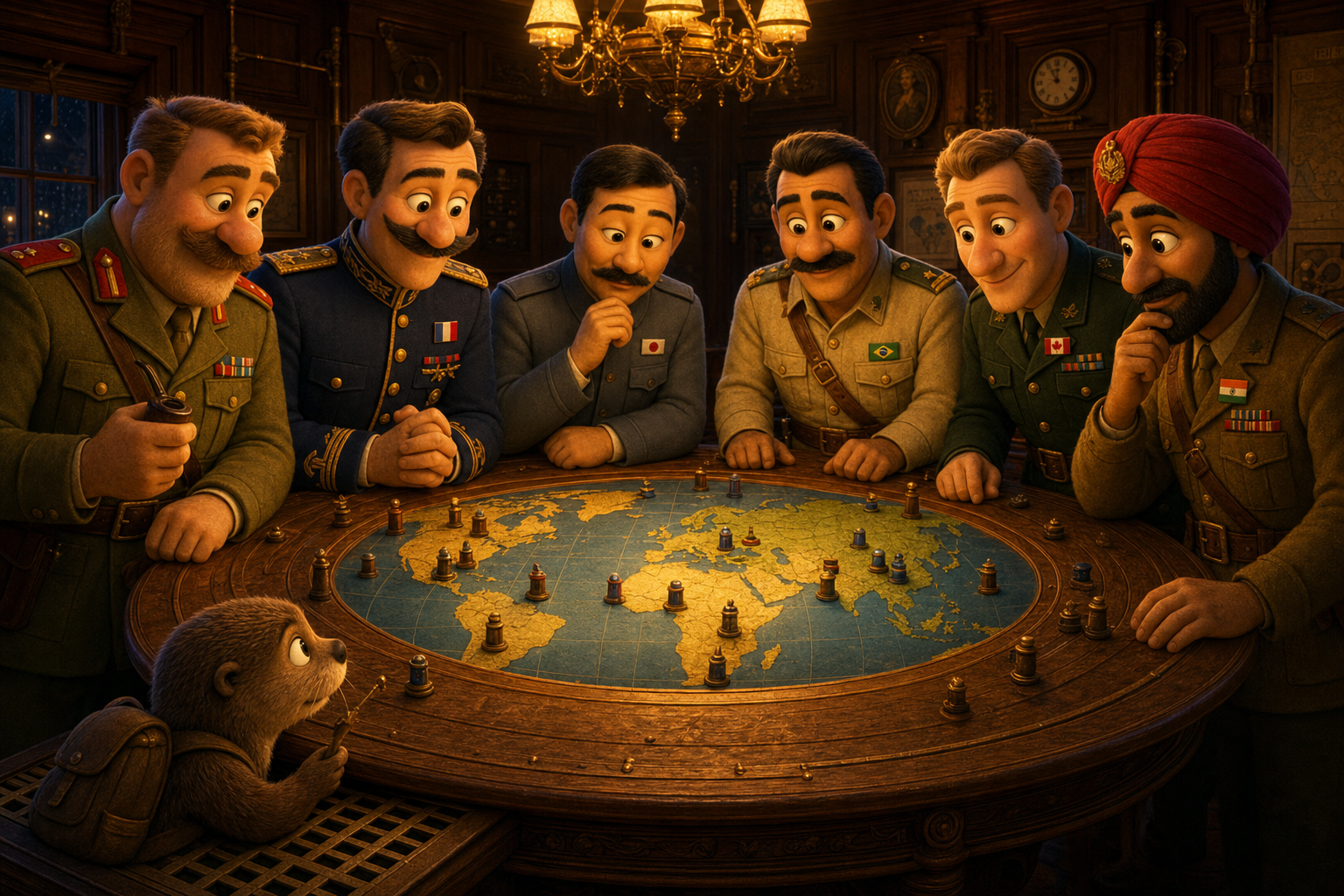
Candlelit back-room negotiation. A Cridder envoy. A human ally. A Creptor delegate. None of them trust each other. All of them are tired of the war that hasn’t officially started yet. The film’s thesis lives or dies in this room.
Somewhere on the planet, the human-on-human war that everyone has been preparing for actually starts. Collateral damage hits a foreign Cridder village we’ve come to love. The film stops being abstract. The film begins to bleed.
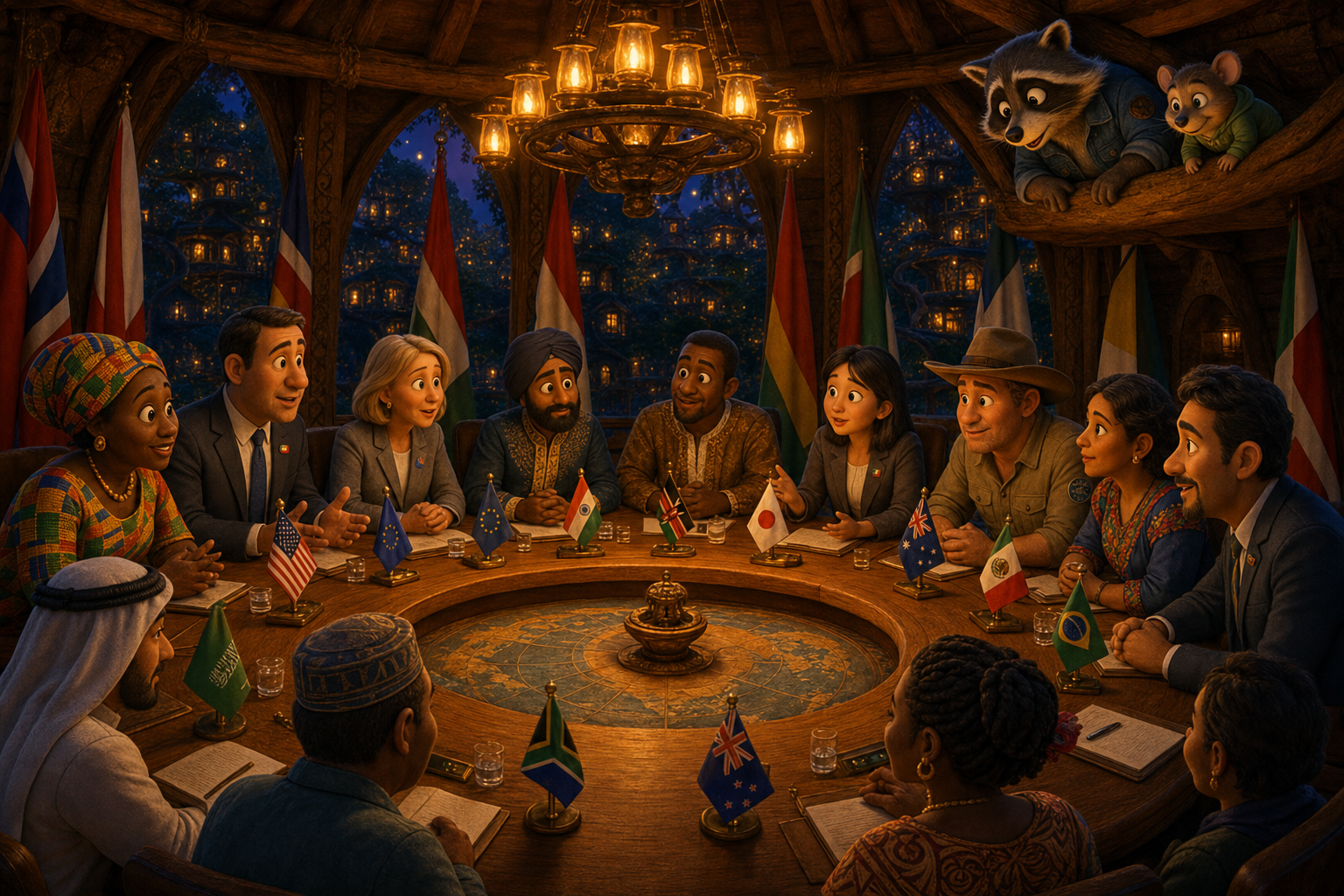
A hidden grove. Envoys arrive from a dozen Cridder villages across continents — rainforest, boreal, savannah, mangrove, alpine, mountain, desert oasis. The only species in this film that doesn’t run on fear takes the table together for the first time in recorded memory.
Cridders go public — not in one city, but in many cities at once, on live feeds, at the same hour. Humans learn, with their morning coffee, that they are not alone on this planet. Brief. Enormous. Irreversible.
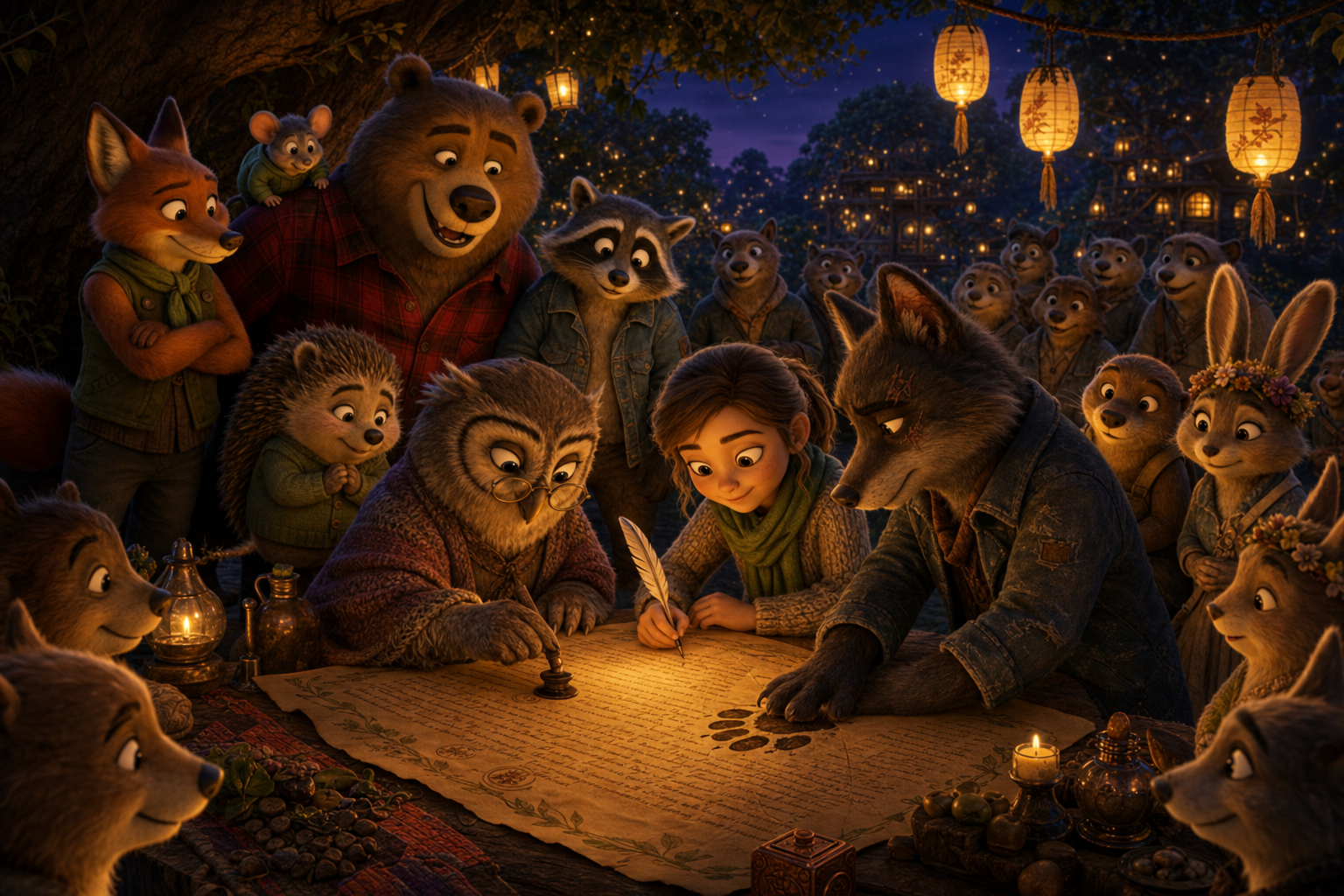
The war isn’t over. But a fragile worldwide pact is signed, witnessed by villages on every continent, co-signed by a small handful of brave humans and one Creptor who finally chose. We end on a held breath, a planted seed, and a clear runway into Film 3.