Why this line
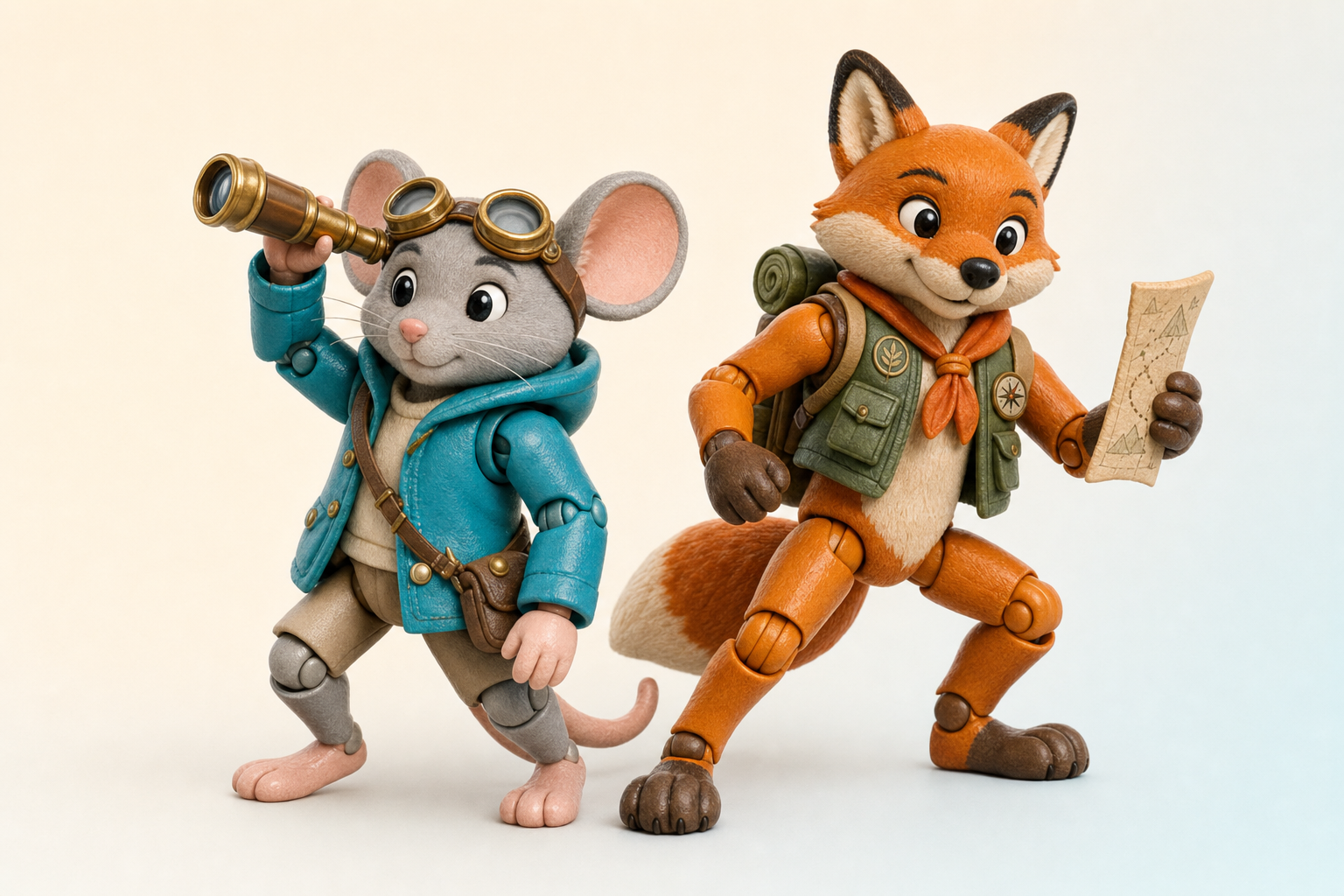
Figures are where the story becomes play. They are the spine that the Cridderville Playset and accessory packs hang off, and the line buyers expect from an animated adventure property.
This is the most tooling-intensive line in the program and the one with the longest lead time, so it needs the earliest start. The payoff is a durable, repeatable play system: kids re-enact and invent scenes, then add figures, accessory packs, and the playset over time. Articulation, scale consistency, and a great out-of-box accessory are the three things that make or break it.
Core play + collectibility. Drives attach-rate to the playset and recurring accessory-pack revenue. Mid-tier hero price point.
On-model, but engineered to pose
Figures stay faithful to the film designs while being re-engineered for articulation and moldability: joints hidden at natural anatomy lines, tails and ears as separate soft-PVC parts, and accessories sized for small hands. Every hero shares a scale system so they read as a cast on the shelf and interact correctly with the playset.
- Consistent height system across all six heroes
- Signature accessory per character, grippable (3 mm+ pegs)
- Joints concealed at fur breaks / garment seams
- Decide single-figure vs. 2-pack hero bundles for launch
Digital sculpt (ZBrush) per character, articulation/parting study, paint master and paint mask call-outs, accessory models, and a packaging dieline. Sculpt sign-off is the critical gate before steel is cut.
Points of articulation
| Neck | Ball joint — tilt + rotate |
|---|---|
| Shoulders (x2) | Ball joint — rotate + raise |
| Elbows (x2) | Swivel-hinge (where character allows) |
| Wrists (x2) | Swivel for accessory posing |
| Hips (x2) | Ball / swivel |
| Knees (x2) | Hinge (taller characters) |
| Tail / ears | Soft PVC; fixed or light swivel |
Target 9–13 functional points depending on body type (Tumble the hedgehog is rounder and simpler; Rowan the fox supports full leg articulation). Joints tuned for a firm, repeatable hold so poses survive play.
Bill of materials
| Body / limbs | ABS for structure + joints; rigid PVC where needed |
|---|---|
| Soft parts | Soft PVC for ears, tails, scarves (safe-pull tested) |
| Accessories | ABS / PVC; metallic or clear effects via paint or material |
| Joints | Molded-in ball/socket; tuned interference fit, no loose pins |
| Decoration | Spray masks + tampo / pad print; in-mold color base |
| Net weight | ~70–110 g per figure depending on size |
Design for moldability: uniform wall thickness (~1.8–2.4 mm), generous draft angles, no undercuts that force costly slides, and joints that snap-fit without separate hardware.
Steel molds & the parting plan
Each character needs a multi-cavity family tool for its unique parts, plus shared tooling for common joints. This is the program’s biggest single up-front investment, so the parting study and DFM review must be locked before any steel is cut — mold changes after T1 are slow and expensive.
| Tool type | Hardened or pre-hardened steel; multi-cavity family molds |
|---|---|
| Tools needed | 1 character tool per SKU + shared joint/accessory tool |
| Tooling cost (est.) | $18k–$35k per character tool (planning estimate) |
| Trials | T0 (first shots) → T1 (textured, decorated) → sign-off |
| Lead time | ~8–12 weeks to first trial shots |
From sculpt to blister
Digital sculpt & sign-off
Sculpt each figure on-model, study articulation and parting lines, sculpt accessories. Approve the digital + 3D-printed sculpt.
Wk 0–6 · designDFM / engineering review
Factory engineers wall thickness, draft, gates, joint fit, and slides. Resolve every undercut before cutting steel.
Wk 5–8Cut tooling
Machine the steel molds (one family per character + shared joints). Longest single step — protect this on the critical path.
Wk 8–20T0 / T1 trial shots
First shots in spec material; check fit, joint feel, flash, sink. Texture and add decoration for T1; redline.
Wk 18–24Paint masters & deco approval
Lock spray masks and pad-print art; approve paint master per character against control art.
Wk 22–26Engineering / pre-production sample
Full assembled, decorated, articulated sample in final packaging. Gold-seal sign-off.
Wk 26–28Safety & compliance testing
3rd-party lab: ASTM F963, EN 71, CPSIA, small parts, sharp points/edges, tension/torque on limbs and accessories.
Wk 27–30Mass production
Mold → deburr → spray/print → assemble → blister + card. Inline AQL 2.5; function-test articulation on a sampling basis.
Wk 30–40Final inspection & ship
3rd-party final random inspection, then FOB and freight to regional DCs.
Wk 40–42Blister card with accessory tray
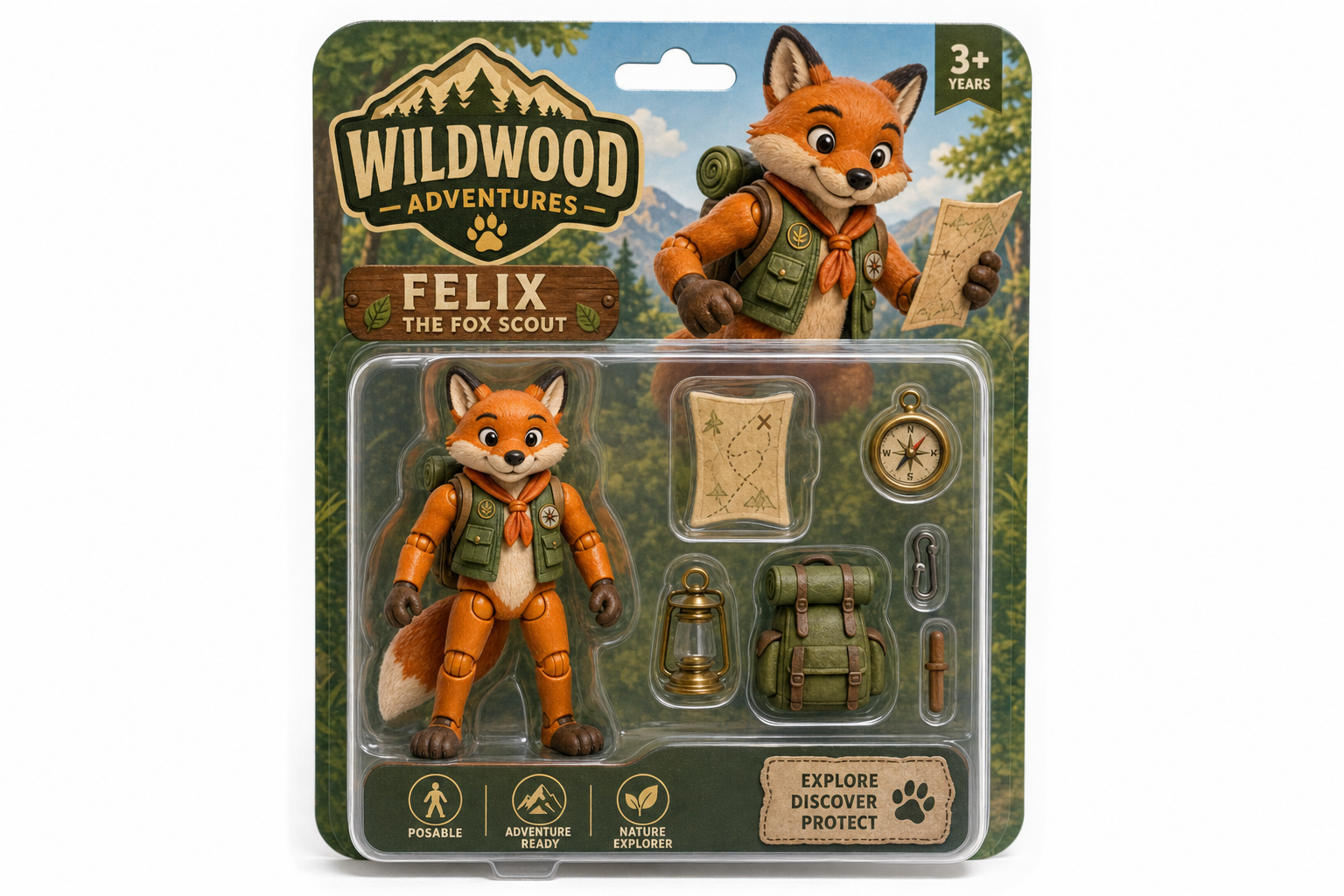
Standard format is a printed backer card with a clear clamshell holding the figure and its accessories in separate bubbles, hero art behind, name plate, age grade, and a hang hole. A try-me window is optional. Plan a window-box upgrade for 2-pack or deluxe SKUs.
- Figure + signature accessory visible out of box
- Hero art + character name plate for shelf identity
- Choose blister (lower cost) vs. window box (premium) per SKU
- Move toward PET / recyclable blister and FSC card
Standards & testing
| US | ASTM F963; CPSIA (lead/phthalates in PVC), tracking label |
|---|---|
| EU / UK | EN 71-1/2/3; CE + UKCA; REACH (phthalate limits) |
| Key tests | Small parts, sharp points/edges, tension & torque on limbs/accessories, drop, bite |
| Age grade | 4+ likely (small accessories) — confirm after small-parts assessment |
Accessory size and joint pull-force are the most common test failures for figures — design accessories above the small-parts threshold where possible, or grade the SKU accordingly.
Unit economics
| Target FOB cost | $2.40–$3.20 / figure with accessories |
|---|---|
| Tooling / NRE | $18k–$35k per character tool (amortize over run) |
| MOQ | ~3,000–5,000 pcs per SKU to amortize tooling |
| Wholesale | $5.50–$6.50 |
| SRP | $12.99 (single) / $19.99 (2-pack) |
Strong per-unit margin but real up-front tooling. Greenlight 2–3 heroes first (Flint + Rowan + Bruno), prove sell-through, then tool the rest. Estimates are for planning — validate with factory quotes.
Phases & gates
Sculpt
- Digital sculpts
- Articulation study
- Sculpt sign-off
Tool
- DFM review
- Cut steel
- T0 / T1 shots
Deco + Certify
- Paint masters
- PPS gold seal
- 3rd-party testing
Produce
- Mass production
- Assembly + deco
- Inline / final AQL
Ship & expand
- FOB & freight
- Accessory packs
- Wave 2 heroes
Indicative timeline: ~9–10 months art-to-FOB, tooling-gated. Start before all other lines.
Open items
- Select launch heroes (recommend Flint, Rowan, Bruno) for first tooling wave
- Commission digital sculpts from the film design pack
- Lock articulation count per character + accessory list
- Decide single vs. 2-pack launch SKU + price ladder
- Get DFM + tooling quotes from 2 factories